

Transformation has become the default operating state for most organizations. There is always a new strategy, a new structure or a new system on the way. Yet ask any HR leader how often those programs genuinely changed the way people work, and the answer tends to be more modest than the slide decks promised.
The research backs up that instinct. Long-running analysis suggests that roughly 70 percent of transformations fall short of their goals, and organizations that failed most often point to employee resistance or management behavior as the main barrier, not flawed strategy or weak analysis. In other words, the plan usually just works on paper.
Few HR leaders have seen this up close quite like Michiel Hogerhuis, now Chief People Officer at Adevinta. As CHRO, he led the people side of large-scale transformations at Fokker and Accell Group, two icons of Dutch manufacturing. He has distilled those years into his 2026 book, De natuurwetten van verandering (The Laws of Change). Its argument is simple and uncomfortable: transformation cannot be managed through structures, roadmaps and KPIs alone. It depends on leadership, behavior and an honest understanding of what truly moves people.
The Laws of Change: Why Change Is a Natural Force, Not a Project
The starting point of the book is a reframing. Most organizations treat change as a project, with a start date, a plan, milestones and a finish line. Hogerhuis treats it as something closer to a force of nature. Change is unpredictable, difficult to control and rooted in human nature, which is precisely why plans and models on their own so often fail. When leaders rely only on the roadmap, people do not move with the change. They get swept along by it.
The alternative is not to abandon planning, but to change the posture of leadership. Instead of trying to impose control, leaders learn to observe and listen: to read which direction the change is actually moving, then guide it, accelerate it where it gains momentum and keep the organization on course. Like any natural force, change can be worked with far more effectively than it can be fought.
What makes the book distinctive is where these principles come from. Rather than adding another change model to an already crowded field, Hogerhuis offers a set of principles drawn from top sport, film and theatre, psychology and anthropology, each tested in factories, boardrooms and teams operating under real pressure. It has drawn endorsements from figures such as former Shell CEO Jeroen van der Veer, Olympic swimming champion Pieter van den Hoogenband and former Accell Group CEO Ton Anbeek, who saw the transformation from the top of the organization.
Transformation Is Human Before It Is Structural
Redrawing an organization chart takes a few weeks. Approving a new strategy takes a board meeting. Rolling out a process takes a project plan. Changing how thousands of people make decisions, collaborate and prioritize their day takes something else entirely.
This is the trap many transformations fall into. Because structural change is visible and measurable, it becomes the proxy for progress. New reporting lines go live, the roadmap turns green and the KPIs look reassuring. Underneath, people often keep working exactly as before, now with different job titles. The organization has been rearranged, but it has not changed.
For HR, this is where the role in transformation starts: questioning the definition of done. A transformation is not complete when the new structure is announced. It is complete when the new behaviors have become the normal way of working, even when no one is watching. Seen through the laws of change, a new structure is not the change itself. At best, it is the riverbed the change can flow through.
Leadership When the Playbook Stops Working
Every transformation starts with a plan. Sooner or later, reality departs from it. Markets shift, key people leave, a customer crisis lands in the middle of the rollout, or the workforce simply responds in ways no one anticipated. This is the moment the playbook stops being useful and leadership starts to matter.
When change becomes uncertain, emotional and unpredictable, leaders face a choice. They can hold tighter to the plan, adding governance and pushing harder on targets. Or they can step into the uncertainty with their people: being visible, admitting what they do not yet know, and making trade-offs openly instead of pretending everything is on track.
The first response feels safer but usually drains energy and trust. It is also exactly what the laws of change warn against: trying to control a force that will not be controlled. The second is harder and far more effective, because it starts with reading what is actually happening rather than what the plan says should be happening. People rarely expect leaders to have every answer. What they need is evidence that leaders understand what the change is costing them and are willing to carry some of that weight.
What Makes People Truly Move
Understanding the new business case doesn’t automatically make people give up familiar ways of working. Familiar ways of working carry identity, competence and status. Asking someone to abandon them is asking them to become a beginner again, often while their job security feels less certain than before.
People move when a few conditions are in place: they understand why the change matters, they can see a credible version of their own future in it, and they have some influence over how it happens. That last condition is consistently underestimated. Research shows that organizations involving employees in shaping change rather than handing it down from the top can raise their probability of change success by as much as 24 percentage points.
Commitment, in other words, is built rather than announced. It grows through conversations, early wins people can recognize as their own, and leaders who keep listening long after the launch event is over.
Lessons From Inside Two Major Transformations
Fokker and Accell Group, the company behind bicycle brands Batavus and Sparta, are the main cases in the book. Both are proud manufacturing businesses with strong identities, and both reached a point where everything was at stake and the systems they relied on no longer worked. Transformations in organizations like these test every assumption about change, because the existing ways of working are not simply bad habits. They are often the very reason the company became successful in the first place.
Hogerhuis’s account is notable for its candor. The principles in the book were not designed in advance. He and his team learned them through trial and error, and the book is open about the failures as well as the successes. That honesty is exactly what most transformation literature lacks.
For HR leaders, the value lies in that unvarnished view. The failures are often where the most transferable lessons sit: the point where a structure was changed before the behavior was ready, where leaders were asked to drive change they did not yet believe in, or where the workforce was informed rather than involved.
Rethinking the HR Role in Transformation
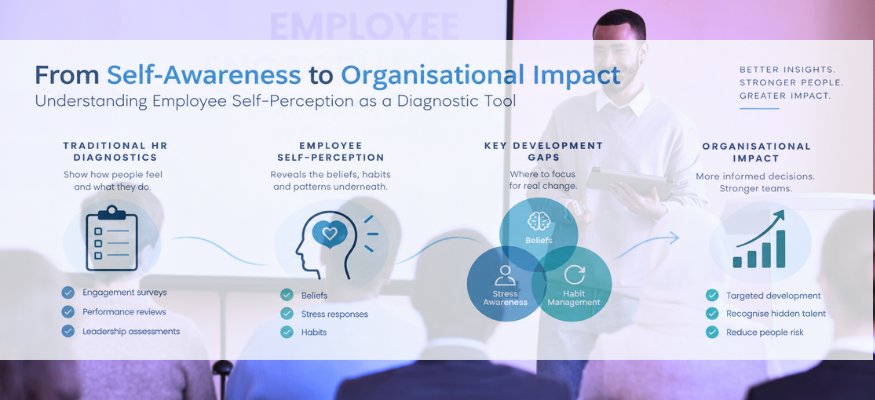
A few practical shifts follow from this perspective. First, measure behavior, not only milestones. Alongside structural KPIs, track whether the decisions, conversations and collaboration patterns the transformation.
Second, invest in leaders before you invest in roadmaps. Managers are the ones who translate change into daily reality, and they need support to handle the emotional side of it, not just a cascade deck to present.
Third, design for involvement from the start. Bring employees into the shaping of the change early, while their input can still alter the outcome.
Finally, plan for the moment the playbook stops working. It will come, and the organizations that handle it best are the ones that expected it.
Underneath all of these sits the central lesson of The Laws of Change. HR’s most valuable contribution to transformation is not managing the plan. It is helping the organization notice where change is really heading, and making sure leaders respond to that reality rather than to the roadmap.
Hear It Firsthand at Horizon Summit 2026
Michiel Hogerhuis will be delivering his keynote, “Transformation: When the Playbook Meets Reality – The Human Laws of Change”, at Horizon Summit 2026, taking place November 10 and 11 at the Hilton Amsterdam Schiphol. Drawing on the lessons in De natuurwetten van verandering and his years leading the people side of transformation at Fokker and Accell Group, he will offer a candid, behind-the-scenes look at what worked, what failed, and what leaders and HR can do differently when transformation really matters.